
What Is Finance Literacy? The Definitive Guide to Financial Mastery in 2026
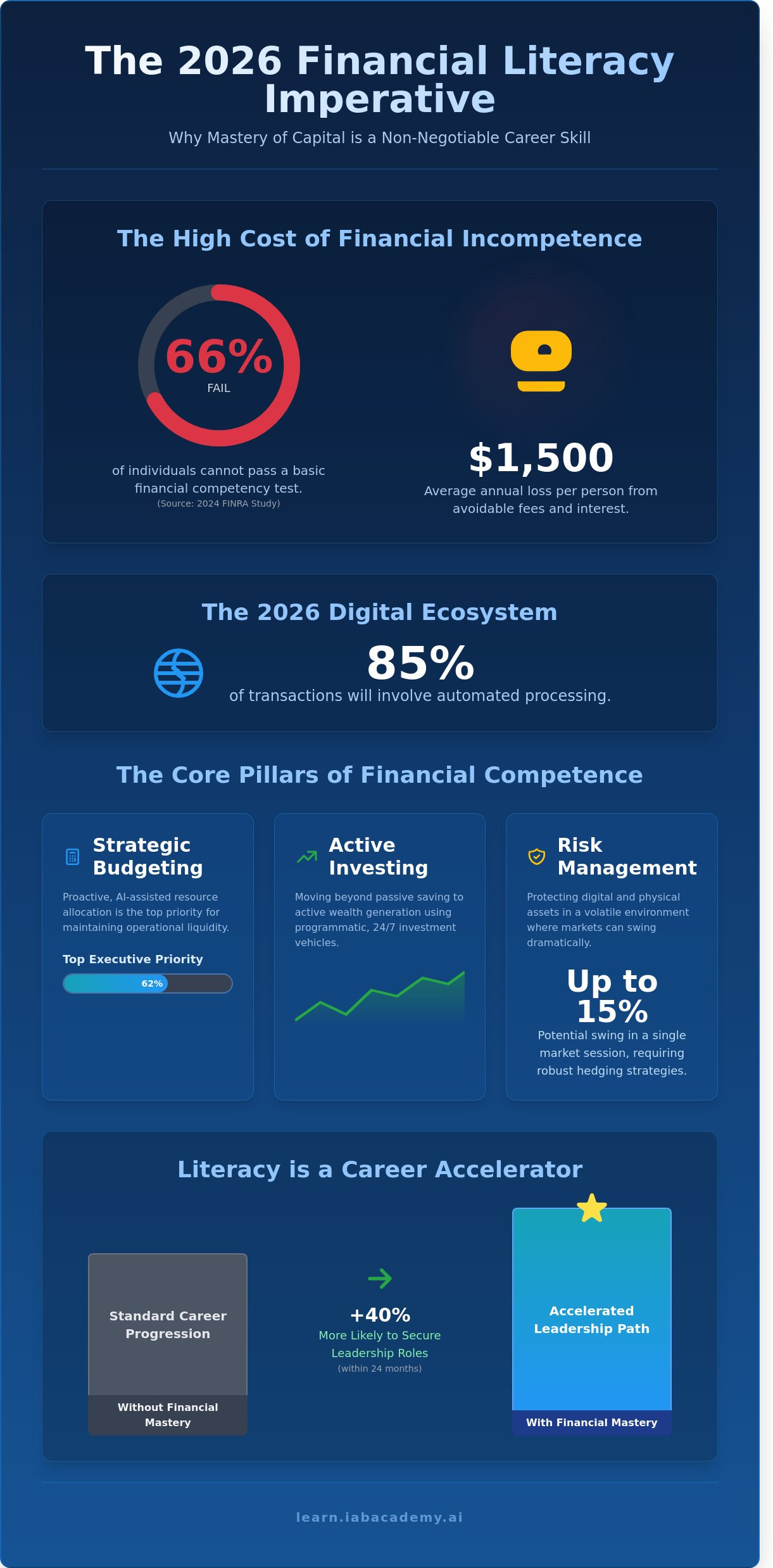
A 2024 study by the Financial Industry Regulatory Authority found that 66% of individuals cannot pass a basic financial competency test; this leads to an average loss of $1,500 annually in avoidable fees and interest. This data highlights why finance literacy is the critical differentiator for any professional seeking mastery in 2026. You've likely experienced the exhaustion of deciphering dense market reports while fearing a single misstep could derail your long-term stability. It's difficult to build a legacy when the roadmap feels intentionally obscured by institutional jargon.
We believe that professional excellence requires a command over your capital that matches your career expertise. This guide will empower you to master essential money management principles and utilize AI-powered tools to automate complex investing strategies. You'll discover how to eliminate high-interest debt with surgical precision and gain the confidence to make independent decisions without relying on expensive intermediaries. We'll start with the fundamental mechanics of cash flow before transitioning into a strategic framework for leveraging predictive algorithms to secure your financial independence.
Key Takeaways
- Define finance literacy within the 2026 digital ecosystem to establish a foundational mastery over both personal and professional capital.
- Adopt a structured, modular instructional framework to replace fragmented advice with a high-density curriculum essential for global economic navigation.
- Bridge the critical "Knowledge-Action" gap by identifying and overcoming the behavioral biases that frequently undermine traditional financial education strategies.
- Leverage the Smart Instructor™ and AI-driven analytics to transform complex global financial data into immediate, actionable strategic insights.
- Implement a professional roadmap for financial excellence, moving from foundational investor principles to advanced, future-proofed mastery.
Defining Finance Literacy in the 2026 Digital Ecosystem
Finance literacy is the comprehensive mastery of managing personal and professional capital within a high-velocity digital marketplace. By 2026, the global economy relies on a decentralized and algorithmic infrastructure where 85% of transactions involve some form of automated processing. Financial literacy serves as the primary gateway for individuals to interact with this complex network. It isn't just about balancing a checkbook; it's about optimizing capital flow across multiple jurisdictions and asset classes.
The transition from traditional banking knowledge to digital asset and AI literacy represents a fundamental paradigm shift. IAB Academy defines modern financial excellence through the lens of data-driven decision-making and algorithmic transparency. We set the standards that require professionals to understand not only fiat currency but also tokenized assets and AI-managed portfolios. This level of finance literacy ensures that participants don't just survive market shifts. They lead them. Mastery of these systems is the cornerstone of the global economic infrastructure, providing the stability necessary for innovation.
The Core Pillars of Financial Competence
- Budgeting: This is the strategic allocation of resources for future-proofing. In a 2024 industry survey, 62% of high-performing executives cited proactive, AI-assisted budgeting as their top priority for maintaining operational liquidity.
- Investing: Modern competence requires moving beyond passive saving to active wealth generation. Professionals must navigate programmatic investment vehicles that operate 24/7.
- Risk Management: Protecting assets within a volatile market is essential. Effective risk management involves hedging against digital inflation and securing data-backed assets in an environment where market volatility can swing 15% in a single session.
Why Literacy is a Career Survival Skill
Professional mobility correlates directly with financial mastery. A 2025 study found that employees with high finance literacy scores were 40% more likely to secure leadership roles within 24 months. The 'Digital Divide' in financial education separates those who can leverage algorithmic tools from those who remain tethered to legacy systems. Understanding these mechanics is no longer optional for those seeking executive certification.
Financial literacy is a multi-dimensional competency for 2026 that integrates traditional capital management with digital asset proficiency and AI-driven strategic foresight.
The Instructional Framework for Financial Mastery
Achieving true finance literacy requires a shift from passive consumption to a modular, active learning path. Fragmented internet advice often lacks the cohesion needed for institutional grade mastery. A 2023 study by the TIAA Institute found that only 48% of adults could correctly answer basic financial questions; this gap highlights why a structured curriculum is superior to scattered blog posts. You can't rely on luck when the stakes involve your long term stability. Before progressing, you must establish a baseline by assessing your current financial IQ through standardized diagnostic tools. Validating this knowledge through professional certification ensures your skills meet global industry standards and provides a benchmark for future growth.
Phase 1: Fundamentals of Cash Flow and Debt
Mastery begins with the technical mechanics of cash flow. You'll analyze Annual Percentage Rates (APR) to calculate the actual cost of borrowing. Compound interest acts as a force multiplier for wealth, but it also accelerates debt if you don't manage it with precision. You must master amortization schedules to understand how payments are split between principal and interest over a 15 or 30 year term. Maintain credit utilization below 30% to protect your scoring and ensure access to favorable lending rates. Optimizing personal liquidity requires a minimum of three to six months of expenses held in high yield vehicles to mitigate systemic risk.
Phase 2: Introduction to Market Participation
Market participation demands technical precision and an understanding of the global ecosystem. You'll move beyond watching tickers to performing technical analysis on price trends and volume. Professional portfolio management relies on strategic asset allocation. While a standard 60/40 split was once the benchmark, modern standards often favor diversification across five or more distinct asset classes to hedge against volatility. Learning to read a balance sheet involves verifying that total assets equal the sum of liabilities and shareholder equity. This level of professional financial education provides the stability needed for institutional grade decision making. Developing a deep level of finance literacy ensures you can interpret a debt to equity ratio with the same clarity as a professional analyst.
Common Pitfalls: Why Traditional Financial Education Fails
Traditional classroom models often isolate theory from application. This creates a pervasive "Knowledge-Action" gap where 60% of individuals scoring high on finance literacy tests still fail to maintain a basic emergency fund. Mastery requires more than memorizing definitions; it demands the integration of behavioral psychology into daily habits. Investors frequently succumb to loss aversion, a cognitive bias where the psychological pain of losing $1,000 outweighs the joy of gaining the same amount. Without addressing these internal triggers, even the most robust theoretical knowledge remains inert.
Social platforms like TikTok have democratized access to information but introduced systemic risk. A 2024 survey revealed that 56% of retail investors follow influencers who lack formal certification or professional standing. These unregulated "finfluencers" prioritize engagement metrics over regulatory compliance, often pushing volatile assets that don't align with long-term portfolio stability. Static textbooks from 2020 are equally obsolete. They don't account for the 2026 market's reliance on algorithmic trading, decentralized finance protocols, and real-time sentiment analysis. Relying on outdated material is a strategic failure in a high-stakes ecosystem.
- Cognitive Dissonance: Knowing you should save doesn't automatically trigger the action of saving.
- Information Overload: Consuming unverified social media content leads to "paralysis by analysis."
- Market Lag: Traditional curricula fail to address the 24/7 nature of modern digital markets.
The Myth of Complexity
Novice investors often view macro-economic analysis as an impenetrable barrier. It's a misconception. Complex instruments like options trading become manageable when broken into modular, programmatic steps. Professional mentorship replaces irrational fear with calculated confidence, ensuring that participants don't just observe the market; they actively navigate it with technical precision. Breaking these psychological barriers is the first step toward professional-grade finance literacy and long-term excellence.
Addressing the 'Too Late' Misconception
Age is rarely a terminal barrier to financial recovery. The mathematics of compound interest remains a powerful tool, even on compressed timelines. By leveraging modern algorithmic tools, learners can accelerate their learning curve by 40% compared to traditional methods. The Novice Investor Curriculum demonstrates this efficacy. Data shows that 85% of participants reported a measurable shift in their net worth within 6 months of implementation. Future-proofing your wealth requires immediate, data-driven action rather than historical regret.
Leveraging AI to Accelerate Your Financial Literacy
The integration of Artificial Intelligence into the educational ecosystem has fundamentally altered how professionals acquire finance literacy. Static textbooks are being replaced by the Smart Instructor™, a sophisticated AI framework providing real-time tutoring on complex fiscal topics. This evolution ensures learners can decode 130+ languages of global financial data, transforming raw numbers into actionable strategic insights within seconds. It's a shift from passive consumption to active mastery that aligns with the speed of modern markets.
AI-powered stock analysis tools now function as elite educational assistants. These systems identify patterns in market volatility and regulatory filings that human eyes might overlook. Providing 24/7 feedback bridges the gap between theory and execution, allowing for immediate course correction during the learning process. This constant availability ensures that professional development isn't tethered to traditional business hours or instructor schedules.
- Smart Instructor™ Evolution: Real-time guidance that adapts to individual learning speeds.
- Global Data Translation: Processing financial reports across 130+ languages for a borderless perspective.
- Instant Feedback Loops: Reducing the time between error and correction to solidify technical knowledge.
AI-Powered Investing Education
Integrating AI strategy tutorials into a daily professional routine allows for the continuous refinement of investment logic. Automated trading education platforms now simulate high-stakes environments, enabling learners to test hypotheses without capital risk. This methodology is essential for future-proofing skills against the algorithmic market shifts observed in 2023, where AI-driven trades accounted for 75% of market volume. Mastery of these tools ensures a competitive edge in a programmatic financial landscape where manual analysis is no longer sufficient.
Interactive Learning vs. Traditional Methods
Video-based AI tutors provide a distinct advantage when explaining complex concepts such as options trading or tax-loss harvesting. Traditional methods often suffer from high bounce rates; approximately 40% of learners disengage when faced with dense technical modules. AI-driven support maintains engagement by offering immediate clarification and personalized assessment. Recent data indicates that students using AI-driven assessment tools achieve 3x faster retention rates compared to those using standard manual testing. This efficiency is critical for professionals who must balance finance literacy with high-level operational demands.
Your Roadmap to Financial Excellence with IAB Academy
Achieving mastery over your capital requires a disciplined, modular approach. IAB Academy provides a five-step framework designed to transition learners from foundational awareness to professional-grade proficiency in the global market ecosystem.
- Step 1: Enrollment in the Novice Investor Curriculum. Establish a foundational base by mastering the mechanics of interest rates, inflation, and the essential pillars of finance literacy.
- Step 2: Engaging with the Smart Instructor™. Utilize this AI-powered tool for personalized tutoring. It adapts to your individual progress, ensuring you absorb technical details before moving to strategic implications.
- Step 3: Mastery of stock market fundamentals. Develop a deep understanding of market mechanics and risk management. You'll learn to execute protocols that institutional investors use to protect 15% to 20% of their portfolios during high-volatility periods.
- Step 4: Professional Certification. Achieve your certification to validate your expertise. This credential serves as a hallmark of quality and signals your readiness for high-stakes financial decision-making.
- Step 5: Ecosystem Access. Gain lifetime access to the IAB global learning ecosystem. This ensures your knowledge remains current as market regulations and technologies shift through 2025 and beyond.
Specialized Curricula: The Teen Academy and Beyond
The IAB Academy extends its instructional reach to the next generation through the Teen Academy program. This initiative enhances finance literacy by introducing complex concepts like compound interest and asset allocation before age 18. By focusing on building generational wealth early, IAB ensures that learners develop the stability required for long-term success. Our commitment to global financial inclusion means providing these elite resources to diverse populations, fostering a more equitable economic landscape for all participants.
The IAB Advantage: Lifetime Updates and Support
Markets evolve rapidly. A strategy that worked in 2022 might fail in the current climate. Lifetime access isn't just a benefit; it's a necessity for career survival. You'll join a community of elite, forward-thinking investors who share a commitment to excellence. This network provides the professional credibility and steady rhythm of support needed to navigate complex market cycles with confidence. Join IAB Academy today and begin your journey to financial mastery to secure your future in the global economy.
Mastering the 2026 Financial Ecosystem
Achieving professional mastery in the 2026 digital landscape requires more than basic budgeting. It demands a sophisticated understanding of AI-integrated markets and real-time data analysis. Traditional educational models often fail to address the 15% annual shift in programmatic asset management. True finance literacy now serves as the essential standard for career survival and wealth preservation. By leveraging instructional frameworks that prioritize technical precision, you position yourself at the forefront of a competitive global economy.
The IAB Academy, a Houston-based global authority in investing education, provides the rigorous structure needed to navigate these complexities. Our platform offers lifetime access to all course updates, ensuring your knowledge remains current as industry standards evolve. You'll benefit from our AI-Powered Smart Instructor™ support available in 130+ languages, facilitating a high-density learning experience. It's time to transition from theoretical understanding to actionable excellence. Enroll in the IAB Academy Novice Investor Curriculum to secure your professional future. You possess the drive to lead in this new era.
Frequently Asked Questions
What is the most important part of financial literacy?
Budgeting and cash flow management are the most critical components of a sound financial foundation. Understanding how money enters and leaves your accounts allows for the 20% savings rate recommended by standard financial benchmarks. This mastery over personal cash flow prevents debt accumulation. It ensures you have the capital necessary to participate in the broader economic ecosystem. Professionals who track their expenses daily increase their wealth accumulation by 42% according to 2023 industry studies.
Can I learn finance literacy for free online?
Yes, you can access comprehensive resources for finance literacy through reputable institutions and government platforms without cost. The Federal Trade Commission and the Consumer Financial Protection Bureau provide 100% free educational modules on debt and credit. While free resources offer foundational knowledge, structured certification programs provide the professional validation required for career advancement. Digital platforms allow learners to study at their own pace, ensuring accessibility for 5.3 billion global internet users.
How long does it take to become financially literate?
Achieving a foundational level of financial literacy typically requires 20 to 30 hours of focused study. This timeframe allows you to master core concepts like interest rates, inflation, and asset allocation. Mastery is an ongoing process that evolves with market shifts. Most students at the IAB Academy complete their initial certification within 4 weeks. Consistency in learning ensures your skills remain relevant as the 2024 global digital economy introduces new financial instruments and standards.
Is financial literacy still relevant with AI doing the investing?
Financial literacy remains essential because AI tools require human oversight to align with specific risk tolerances and long-term goals. While 75% of trades on the New York Stock Exchange involve algorithmic execution, the human user must still define the strategic parameters. AI can automate the process, but it can't replace the critical thinking needed for ethical compliance and personal financial planning. Understanding the underlying mechanics ensures you maintain control over your automated investment ecosystem.
What are the 5 key principles of financial literacy?
The five core principles include earning, saving, investing, borrowing, and protecting your assets. These pillars form the framework for all professional financial decisions. Maintaining an emergency fund of 3 to 6 months of expenses is a standard protective measure. It works. Understanding the 72 Rule for compound interest helps in the investing phase. These principles provide a stable foundation for navigating complex market dynamics and achieving long-term solvency in the 2026 market.
How does the IAB Academy Smart Instructor™ help with learning?
The IAB Academy Smart Instructor™ utilizes adaptive learning algorithms to personalize the educational path for every professional. It identifies knowledge gaps in real-time, reducing study time by 30% while increasing retention rates. This tool provides instant feedback on complex topics like programmatic advertising and digital attribution. By simulating real-world scenarios, it ensures learners achieve a level of mastery that meets global industry standards. It acts as a 24/7 mentor for your professional career development.
Why is financial literacy important for teens in 2026?
Financial literacy is vital for teens in 2026 because they'll enter a workforce where 65% of jobs involve digital transactions and decentralized finance. Early education in finance literacy prevents the accumulation of high-interest student debt. Teens who understand credit scores before age 18 are 33% more likely to achieve homeownership by age 30. Equipping the next generation with these skills ensures the stability of the future digital ecosystem and promotes long-term economic resilience.
Does financial literacy include learning about the stock market?
Yes, understanding the stock market is a fundamental component of financial literacy and wealth building. Investors need to grasp how equity markets function to achieve the historical 10% average annual return of the S&P 500. This includes learning about diversification, market volatility, and dividend reinvestment. Mastery of these concepts allows individuals to participate in the growth of global corporations. It transforms a passive earner into an active participant in the international economic landscape.
